Complete AV Checklist: What You Actually Need for a 500-Person Corporate Event in Hong Kong
AV equipment checklist for a 500-person corporate event in Hong Kong: audio, video, lighting, power and crew. Most planners scale AV gear linearly — a 30-person boardroom kit times ten. That approach fails. At 500 attendees, the failure points are not quantity but coverage, redundancy, and the invisible infrastructure: power, signal flow, and crew. This guide breaks down every system a mid-size Hong Kong function or hotel ballroom event needs, what size each component should be, and the items that routinely get left off the list until someone notices them missing 20 minutes before doors.
Why 500 People Is a Different Class of Event
Why 500 People Is a Different Class of Event
A 50-person meeting is forgiving. One wireless microphone, one projector, house power, and a laptop cover it. At 500, three variables change:
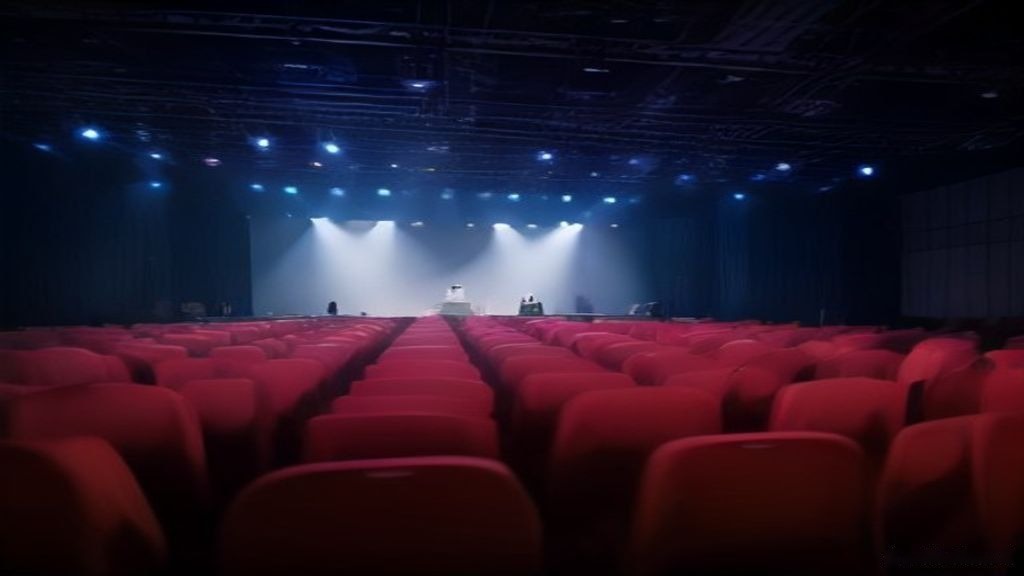
Acoustics: hotel ballrooms and convention halls are built for echoes, not speech. The same PA volume that sounds adequate at the front of the room is a wall of feedback at the back, or dead silence entirely if the system is undersized.
Sightlines: every attendee must read the display from their seat. A 120-inch TV or a standard projector that works for a boardroom is unreadable from the back row of a 500-seat theatre layout.
Redundancy: with 500 people in the room, a single point of failure (one microphone, one laptop, one HDMI cable) is no longer a minor inconvenience — it is the story of the event.
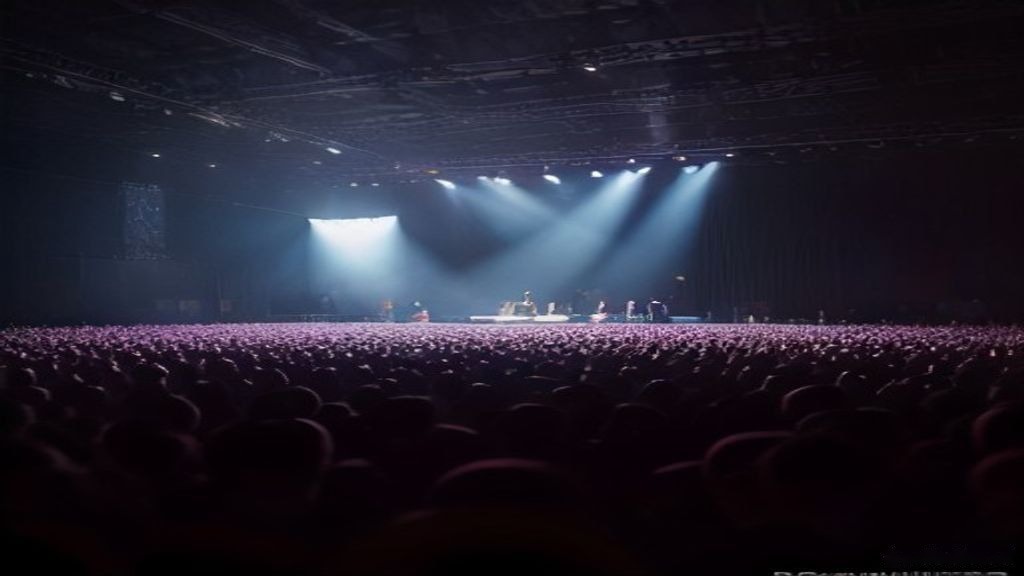
The sizing rule that holds across the industry: professional-grade AV is essential for events with 50+ attendees, and the jump from 100 to 500 attendees is where the equipment class changes from “powered speakers and a projector” to “line array, LED wall, and full production infrastructure.”
Audio: PA, Microphones, and the Mixing Chain
Audio: PA, Microphones, and the Mixing Chain — Prosound Hong Kong
Audio is the single highest-impact failure in corporate events. Attendees forgive a mediocre image; they do not forgive a speaker they cannot understand.
PA system — sized by room, not by headcount
For 500 people in a high-ceiling hotel room or convention hall, the standard specification is a professional line array system, flown or ground-stacked, with subwoofers for music segments. For shorter, wider rooms, four powered tops will often work — but if the room is a long theatre, a line array with a dedicated delay fill for the back third is what keeps speech intelligible across the full floor. Ask your AV provider for the coverage diagram before you commit, not after.
Microphones — plan per segment, not per speaker
Count how many microphones are live at once in each segment of your run of show, then add one:
Wireless handhelds (2): primary presenter plus backup. Every wireless mic needs its own transmitter and its own coordinated frequency.
Podium gooseneck (1): for lectern-bound keynotes — consistent pickup, no handling noise.
Lavalier (1–2): for presenters who walk the stage, demo products, or gesture with both hands.
Panel boundary mics (4–8): for tables of four to eight in panels or town halls.
Q&A mic (1): hand to the host or a roaming operator.
When more than a handful of wireless channels run simultaneously, frequency coordination matters — interference does not announce itself until someone’s voice drops out mid-sentence.
Mixing and playback
A digital mixing console with enough input channels for every live source, pre-programmed scene recall for each segment of the show, plus a clean line-out for any recording. A dedicated sound technician at the console for the full event is not an optional line item at this scale — they manage levels, kill feedback, and handle microphone handoffs in real time.
Video: LED Wall or Projector for 500 Seats?
Video: LED Wall or Projector for 500 Seats? — Prosound Hong Kong
For a 500-person event, the debate between LED wall and projection largely resolves itself based on venue light control:
LED video wall (6m × 3.5m as a working minimum, P3–P4 pitch): the default for ballrooms with ambient light or windows. Brightness is independent of room lighting, so image quality holds at 3 p.m. as well as 6 p.m.
Laser projector (4K class, 20,000-lumen class for large rooms): the right answer for dark, dedicated theatre spaces and for tight function rooms where physical clearance cannot fit a wall.
Either way, the chain needs: a video switcher and playback source for slides and video files, a confidence monitor at the lectern facing the presenter, tested codec-compatible presentation files, and a backup laptop pre-loaded with all content and adapters. For sizing the display itself, our LED wall rentals guide for events covers pitch selection and viewing-distance math in detail.
Stage: Staging, Podium, and the Physical Base
Stage: Staging, Podium, and the Physical Base — Prosound Hong Kong
This category sits between “obvious” and “forgotten” and is the most expensive to fix late:
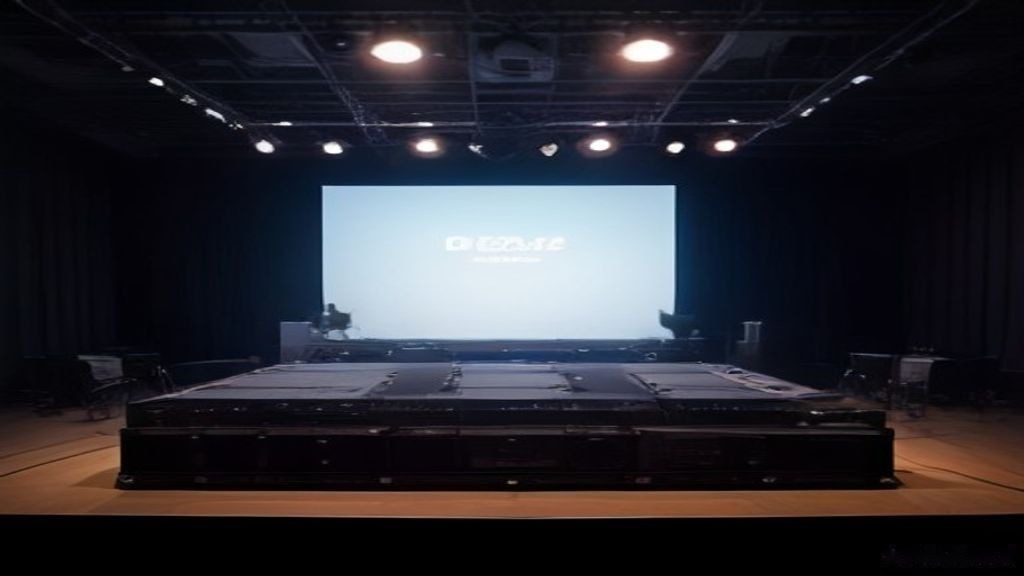
Modular staging: 6m × 4m minimum for a keynote plus podium position; larger if panel tables sit on stage.
Podium/lectern with integrated podium light, and a step or ramp for stage access.
Steps and skirting: every riser and stage needs safe access on at least two sides and clean finishes at floor level — the difference between a stage that photographs well and one that looks like a construction site.
Cable management: ramps across every walkway, gaff tape on runs, and a patch bay away from the performance area.
Crew communication: a two-channel intercom system between stage manager, front-of-house audio, and lighting — the first item missed on most kit lists and the first thing blamed when a cue goes wrong.
Lighting: What Actually Matters at Corporate Scale
Lighting: What Actually Matters at Corporate Scale
Corporate lighting has two jobs: making presenters visible and making the room look intentional.
Front wash (2–4 LED fixtures): warm white light on the presenter’s face. Without it, speakers appear as silhouettes against their own slides.
Podium light: a focused gooseneck so the speaker can read notes without flooding the stage.
Uplighting: LED fixtures around the perimeter in brand colours — the change from “hotel room” to “branded environment” for the cost of a dozen fixtures.
Logo/gobo projection: your company mark on a wall or the stage floor. It photographs well; sponsors notice.
Moving heads (optional): transformative for award reveals, keynote entrances, and product launches; unnecessary for a straightforward briefing.
A lighting console and a trained operator round it out — a lighting rig without cue ownership is a static decoration.
Power and the Invisible Infrastructure
Power and the Invisible Infrastructure — Prosound Hong Kong
The items that get left off corporate event equipment checklists are rarely the expensive ones. They are the small ones:
Power distribution units (PDUs) and doghouse power, sized to the combined load of audio, video, and lighting — confirm the venue’s circuit capacity in the site survey, not on load-in day.
Spare everything critical: one spare wireless receiver/transmitter, one spare laptop, HDMI and USB-C adapters per presenter input, fresh batteries for every wireless mic and handheld.
Crew roles on paper: audio tech, video tech, lighting tech, and a named technical director, radio channels assigned.
Timeline buffers: 3–6 hours load-in before doors for a mid-size event, a full end-to-end soundcheck with at least one presenter, and a 15-minute pre-doors walk of the room listening from the back row and the sides.
If You Go Hybrid: Cameras, Recording, Stream
If You Go Hybrid: Cameras, Recording, Stream — Prosound Hong Kong
If the content is worth capturing beyond the room, add it to the plan at the same time as the base AV — retrofitting a stream later is where budgets break:
2–4 cameras (PTZ or manned) covering stage wides, presenter close-ups, and audience coverage.
Vision mixer cutting between cameras and the keynote slides.
Hardware encoder plus a streaming laptop on wired Ethernet (a minimum of ~10 Mbps sustained upload) — never the venue Wi-Fi that 500 devices are also using.
Clean audio feed from the mixing console to the recording and stream chain, so the stream hears the room’s audio the same way the front row does.
End-to-end stream test on event day, before doors.
Minimum vs. Full Production: One Table
Minimum vs. Full Production: One Table — Prosound Hong Kong
The most common mistake at this scale is treating the AV as a shopping list and pricing line by line. The table below is a useful way to frame the decision with your provider:
System
500-person minimum
Full production
PA
4 powered tops + subs, ground stacks
Flown line array + delay fill + subs
Microphones
2 wireless handhelds + podium + 1 lavalier
All of the above + panel boundaries + Q&A mic
Mixing
Digital console, single tech
FOH + dedicated recording feed
Display
4K laser projector (dark room)
LED video wall 6m × 3.5m P3–P4
Switching/laptop
1 switcher + 1 backup laptop
Switcher + 2 laptops + confidence monitor
Stage
6 × 4m module + lectern
Full staging + risers + skirting + steps
Lighting
Front wash + podium light + uplighting
Add moving heads + logo projection
Power
1 PDU, venue circuits checked
2 doghouses + PDUs + cable ramps
Crew
2–3 technicians
Audio + video + lighting + tech director + intercom
Every row of the “full production” column is additive, not a different product family — which is exactly why it belongs in a single checklist, managed by a single provider, rather than assembled from three vendors on event morning.
How to Use This Checklist
How to Use This Checklist — Prosound Hong Kong
4–6 weeks out: lock the run of show, then derive the microphone count, display choice, and lighting needs from it. Confirm the venue’s power, load-in windows, and noise rules in writing.
2 weeks out: send the AV provider the presentation files (tested codec), the slide deck order, and the award/music cue sequence if applicable.
Event day: soundcheck with at least one real presenter at the podium; run the full stream end-to-end if hybrid; walk the last hour of setup listening from the back row.
If your venue is a tight Executive suite rather than a ballroom, or your display choice between LED and projection is not settled yet, our AV rental guide walks through the full component chain — audio, video, lighting, and processing — so nothing gets quoted piece by piece.
Frequently Asked Questions
Frequently Asked Questions
How many microphones do I need for a 500-person corporate event in Hong Kong?
For a standard keynote-plus-panel format: two wireless handhelds (one backup), one podium gooseneck, one lavalier for a walking presenter, boundary mics for the panel (one per one or two people), and one Q&A mic. Every wireless unit needs its own transmitter and a coordinated frequency.
Do I need a line array for 500 people, or will powered speakers do?
It depends on the room more than the headcount. Short, wide ballrooms often work with four powered tops and subs; long or high-ceiling rooms (most hotel grand ballrooms and convention halls) need a line array plus a delay fill for the back of the room to keep speech intelligible everywhere. Ask for a coverage diagram.
What display works best in a bright hotel ballroom?
A bright 4K laser projector can work, but it competes with ambient light and any daylight at the windows. An LED video wall is brightness-independent — that is the main reason larger HK corporate events default to LED walls in ballrooms.
What is typically forgotten in event AV that ends up being the most annoying problem on the day?
In order of frequency: the confidence monitor (the presenter cannot see their own slides), adapter and cable spares, fresh batteries, the intercom between crew, and a wired internet path for any stream relying on the venue Wi-Fi.
How early should I book AV in Hong Kong for a 500-person event?
Four to six weeks is comfortable for a full production including crew; major holiday periods (mid-Autumn, year-end, Chinese New Year) and peak exhibition seasons fill earlier. Venue power checks and load-in slot booking are the items that hard-block a late plan.
Plan Your Event AV Before the Date Does It
Plan Your Event AV Before the Date Does It — Prosound Hong Kong
The difference between a checklist and an event that runs is that one of them names who owns each line, at what time, against which circuit. Prosound Hong Kong handles the full chain — audio, video, lighting, staging, power, and crew — from one team in one visit to the venue.
Contact Prosound Hong Kong today for a free consultation — call +852-2668-4882 or email support@prosound.hk.
LED Wall vs Projector for Corporate Events in Hong Kong: How to Choose
Choosing between an LED wall and projector rental is one of the highest-impact AV decisions you’ll make for a corporate event in Hong Kong — and the wrong choice shows up in the photo booth, in the back row, and in your budget line. Both technologies appear in most event quotes, but they solve fundamentally different problems: an LED wall is a self-emissive screen that fights ambient light, while a projector is a light-output engine that depends on you controlling that light.
This guide breaks down LED wall vs projector for corporate events in the five dimensions your stakeholders actually care about — visibility, image quality, setup logistics, cost factors, and content fit — so you can spec the right one (or a combination of both) the first time.
Brightness and Ambience: The Deciding Factor
Brightness and Ambience: The Deciding Factor — Prosound Hong Kong
Why nits and lumens don’t cancel each other out
Brightness is the single biggest technical difference. A projector’s output is measured in ANSI lumens — total light thrown toward a screen. An LED wall’s brightness is measured in nits (cd/m²) — light emitted directly from the panel itself. Professional 4K laser projectors for conferences typically deliver in the range of 5,000–10,000 ANSI lumens, and rental-grade units like large-venue 3LCD machines can reach 6,500 lumens of color brightness. A typical indoor rental LED panel runs in the 600–1,500 nit range, and outdoor-rated panels go far above that. On paper the numbers look unrelated — and they are, because they measure different things.
What matters physically is simple: a projector’s image is reflected light, so every source of ambient light in the room (skylights, glass façades, house lights you forgot to dim) subtracts from what the audience sees. An LED wall’s image is emitted light, so ambient light barely degrades it at all. Industry comparison guides consistently show LED displays looking dramatically brighter than several-thousand-lumen projectors in any lit environment, and remaining readable in daylight while projectors max out well below that.
What this means for your venue
Blackout-able ballroom or meeting room → both work; a projector can give excellent contrast in the dark.
Glass-walled boardroom facing the harbour or a daylight atrium → LED wall has a comfortable edge.
Daytime product launch in a shopping mall or open atrium → LED wall, no contest.
Evening keynote at HKCEC or MICE venues with dimmable lighting → either works; budget and size start to decide.
Image Quality: Contrast, Viewing Angle, and Pixel Pitch
Image Quality: Contrast, Viewing Angle, and Pixel Pitch — Prosound Hong Kong
Contrast at the back row
Because each LED pixel emits its own light, LED walls hold true blacks in bright rooms — the same deck that looks sharp at the head table should still look sharp to the 400th seat. Projector contrast degrades as ambient light rises; in a half-lit ballroom the same deck can look washed out and grey, and side seats see the effect first. Projectors also lose image consistency at the edges: keystone correction, a common compromise in tight rooms, typically degrades effective resolution at the corners.
Viewing angles
LED panels maintain consistent color and brightness across very wide viewing angles, which suits large audiences spread across a hall. Projector images fall off toward the wings — brightness and color shift as seats get further off-axis. For a 200-person conference, that difference is visible to most attendees.
Resolution and pixel pitch
Here the projector is not the underdog. A 4K UHD projector (3,840 × 2,160) can out-resolve a large fine-pitch LED wall of the same screen area, and text-heavy decks look very clean. The key metric for LED walls is pixel pitch (P2.6, P2.97, P3.9, P4.8, etc.): the smaller the number, the finer the pixels and the closer people can stand without seeing the grid. For small executive rooms (5–15 people, sitting 1–3 m from the screen), a fine-pitch wall or, more commonly, a large TV/monitor wall is a better fit than both. For hall sizes of 50+ people, standard fine-pitch rental panels look fully sharp.
Setup and Demob: Logistics Compare
Setup and Demob: Logistics Compare — Prosound Hong Kong
Factor
LED Wall Rental
Projector + Screen Rental
Structure required
Yes — truss, cabinet stacking, power distribution, signal/processing gear
Minimal — one unit, a screen, throw space
Setup complexity
High: multi-person crew, calibration
Low: position, focus, keystone
Screen size ceiling
Very high — modular walls scale to many square meters
Practical ceiling ~10 m+ diagonal; huge screens need multi-projector rigs
Shape flexibility
Rectangular, wrapped, curved, L-shape, full stage backdrop
Rectangle only; curved = image degradation and extra cost
Ambient light tolerance
Excellent (even daylight)
Poor without blackout
Image at long throw
N/A (direct view)
Dependent on throw ratio and lens
Typical use at corporate events
Stage backdrops, product reveals, brand walls, main screens in bright halls
Boardrooms, breakout rooms, budget-friendly main screens in dark rooms
Two logistics notes for Hong Kong venues: LED walls need power — a large wall draws serious current, and venue power capacity is a real constraint to check in your site survey; and projection needs room — in tight function rooms a short-throw projector can be the only physical option even when image quality would favour LED. If you’re weighing short-throw specifically, see our guide on short-throw projectors for tight spaces.
Cost Factors Without Guesswork
Cost Factors Without Guesswork — Prosound Hong Kong
Exact rental pricing depends on size, pixel pitch, rental days, venue access, and crew hours, so treat any specific number as an indicator, not a quote. Directionally, market pricing guides for the region put professional LED display rental in the low-hundreds to around a thousand-plus USD per square meter of screen per event day (varies by pixel pitch and configuration), while a single professional laser projector with screen sits an order of magnitude cheaper per event. Three cost factors dominate either way:
Screen area. LED wall cost scales with square meters. A 4 m × 2.5 m backdrop is several times the screen area of a modest room, and roughly that ratio more in cost than a projector setup.
Configuration and structure. Wrapped corners, custom shapes, and high-pitch-free fine-pitch panels add cabinet, truss, and labour time.
Crew and processing. Both options include a video processor/switcher, crew, and transport — but the LED wall’s rigging crew is a larger line item.
The practical rule: projectors win small, dark, budget-limited setups; LED walls win large, bright, brand-critical moments. Many successful corporate events use both — a main LED wall on stage for the keynote reveal, projector setups in breakout rooms for parallel sessions. That hybrid is routinely the best value-per-square-metre mix.
Content Fit: What Each Technology Looks Best With
Content Fit: What Each Technology Looks Best With — Prosound Hong Kong
Choose the LED wall when:
– The content is brand film, product 3D renders, or colour-graded product video where colour depth is a selling point
– The venue can’t guarantee blackout (glass façades, atriums, daytime)
– You need an oversized screen or a shaped backdrop (curved/wrapped stage)
– Multiple simultaneous sources, camera-to-screen switching, or live-streaming feeds run through the same display
Choose the projector when:
– The event is a classic keynote/deck in a darkened ballroom and the screen needs to be under 10 m diagonal
– Breakout rooms need quick, cheap, repeatable setups
– Physical space or power limits a large rig
– You need 4K text clarity at modest size on a strict budget
Use a hybrid when: main stage plus breakouts, product launch with reveal sequence, or an event where brand impact on the main screen and cost control in side rooms both matter.
Decision Framework in 5 Questions
Decision Framework in 5 Questions — Prosound Hong Kong
Can the room be fully darkened? No → LED.
How many attendees, and how large is the back row? 100+ or back row > 8 m → LED favours.
What is the content? Heavy text/tables in a small room → projector or large TV is enough; heavy video/brand → LED.
What’s the budget shape? One big line vs. many small lines — a hybrid often beats either single option.
What’s the venue constraint? Power capacity and rigging clearance for LED; throw distance and heat for projector.
If the room is a tight executive suite, a professional 4K projector setup is usually the right answer. If you’re building a full stage environment, our AV rental guide covers the rest of the chain — audio, lighting, processing.
FAQ
FAQ — Prosound Hong Kong
What is the main difference between an LED wall and a projector for a corporate event?
An LED wall emits its own light, so its image barely degrades with ambient light and holds contrast across a wide viewing angle. A projector throws light onto a screen, so its image loses contrast as room light rises. Brightness independence from the environment is the core difference.
How big an LED wall is too expensive for a corporate event?
There’s no fixed cutoff — cost scales with square meters, pixel pitch, and structure. A modest 4 m × 2.5 m indoor wall is the most common corporate size in our quotes. Get two or three quotes and compare per-square-metre pricing, not totals; a 50% larger wall is not 50% more if the configuration is different.
Can projector and LED wall be used together at one event?
Yes, routinely. A typical layout is a main LED wall on stage with projector+screen in each breakout room, with one video processing chain per zone. This is often the best value mix for 50–500 person corporate events.
What screen size do I need for 200 people?
A rule-of-thumb used in venue planning is 1 m of screen width per 25–30 seats at typical seating distances, which lands a 200-seater venue around 6–8 m widescreen — the point where projector-only setups either need large-venue 10,000-lumen-class machines or the LED wall becomes the more predictable choice.
How far in advance should I book either option for a Hong Kong corporate event?
For fine-pitch LED walls and large-venue projectors, 2–4 weeks is comfortable; 2 weeks can work for standard items but leaves less room for a site survey change; a last-minute corporate event usually means whatever is in the local fleet that week. Power and rigging clearance are the classic surprises that only a site survey catches.
Plan Your Event Screen with Confidence
Plan Your Event Screen with Confidence — Prosound Hong Kong
The LED wall vs projector choice is rarely about which one is “better” — it’s about matching the technology to your venue’s light, your room’s shape, and your content’s demands. Get a site survey, put both quotes side by side, and ask for a hybrid quote if you have multiple rooms.
Contact Prosound Hong Kong today for a free consultation — call +852-2668-4882 or email support@prosound.hk.
Enhancing Events with Comprehensive Lighting and Sound Solutions
A great event lives or dies on two things you can’t see in the budget spreadsheet: how it sounds and how it feels. Lighting sets the emotional tone; sound carries every word and note. Get either one wrong and even a perfectly planned programme falls flat. This guide breaks down what each layer of event audio and visual production does, how much it costs in Hong Kong, and how to build a package that matches the venue and the audience.
Why lighting and sound are the foundation of event production
Why lighting and sound are the foundation of event production — Prosound Hong Kong
In Hong Kong venues — from Wan Chai ballrooms to outdoor harbourside stages — the raw space is almost always a compromise. Ceilings too low, reverb too long, daylight too strong. Professional event production exists to fix those compromises.
Sound makes the message land. A keynote with muddy audio loses the room within twenty minutes. Clear PA coverage, well-set monitors, and clean wireless channels are what keep an audience engaged from first line to last.
Lighting controls attention and mood. Warm uplighting for a banquet, cool white for a product launch, programmed moving heads for a concert. Lighting tells the audience how to feel before a single note plays.
Integration matters more than gear. The same 300W moving head reads as “cheap” when mistimed and “cinematic” when programmed with the audio cues. That timing is craft, not equipment.
The practical rule: budget for lighting and sound as one combined experience, not two separate line items.
Core components of a professional event sound system
Core components of a professional event sound system — Prosound Hong Kong
A full PA rig for a Hong Kong event typically includes:
Main PA and coverage
Main speakers deliver the bulk of the sound to the floor. For most indoor corporate events (50–300 pax), a compact line-array or point-source pair covers the room; outdoor or larger rooms benefit from flown line arrays plus delay towers so the back row hears the same mix as the front.
Monitors and front-of-house
Stage foldback monitors let performers hear themselves; the mixing console — analogue for small shows, digital for anything with more than eight-plus inputs — is where the sound engineer balances the mix in real time. A digital audio processor handles equalisation and feedback suppression, which in a reverb-heavy ballroom is the difference between intelligibility and howl.
Microphones and wireless
Wired handhelds for MCs, handheld or headset wireless for performers, lavaliers for presentations. A professional show plan usually includes 2–4 wireless channels minimum with spare frequencies, plus a talkback system so the audio desk can coach presenters quietly.
Designing the right lighting package for your venue
Designing the right lighting package for your venue — Prosound Hong Kong
Lighting design starts with what the room already has and what you want the audience to feel. A useful mental model is three layers:
1. Ambient and architectural wash
General fill and architectural light that takes over when house lights drop. Without this layer, the room looks like a black box and video walls float in the void.
2. Feature and accent lighting
Moving heads, profile spots, and LED wash fixtures that create movement, colour, and focus. For corporate launches, slower colour scenes; for concerts, high-tempo programming that reacts to the music.
3. Special effects
Haze for beam visibility, lasers, strobes, and gobo projectors. Haze is the most-underrated item on the rig list — no haze, no visible beams, and moving heads read as dim ceiling lights.
For outdoor Hong Kong venues, the biggest design variable is ambient light: a dusk start on the harbourfront demands a much heavier rig than a blackout ballroom.
Indicative rental prices in Hong Kong (2025–2026)
Indicative rental prices in Hong Kong (2025–2026) — Prosound Hong Kong
Sourced indicative ranges for a mid-scale corporate or concert event. Actual quotes vary with venue access, rigging, and lead time:
Item
Function
Typical range (HKD)
Main PA system
Full venue coverage
60,000–400,000
Monitor speakers
Stage foldback
25,000–120,000
Wireless microphones
Speech / performance
12,000–65,000 per set
Mixing console
Live mix control
40,000–250,000
Digital audio processor
EQ / feedback control
35,000–160,000
LED wash + moving-head rig (mid show)
Feature lighting
30,000–150,000
Haze / special effects
Beam visibility, FX
8,000–40,000
A fully operated mid-size show (300–1,000 pax) in Hong Kong commonly lands in the USD 20,000–50,000 all-in event range once staging, crew, and rigging are included. Treat any figure below half of that with healthy skepticism.
Common sound problems and how professionals fix them
Common sound problems and how professionals fix them — Prosound Hong Kong
From hundreds of shows, these three failure modes cover 80% of complaints:
Feedback (howling) — microphones too close to monitor output or gain set too high. Fix: 31-band equalisation to notch the resonant frequency, lower monitor volume, and reposition capsules. A digital processor with live feedback detection handles this live.
Uneven volume — dead zones and hot spots caused by room acoustics and speaker placement. Fix: an acoustic survey before the show, plus delay speakers that fill the dead zone with time-aligned sound.
Muddy or boomy sound — excess room reverb smearing transients. Fix: cut low-mids on the main PA, use directional microphones, and in extreme cases add acoustic treatment panels to reflective surfaces.
Choosing a production partner for Hong Kong events
Choosing a production partner for Hong Kong events — Prosound Hong Kong
When comparing lighting and sound suppliers, look at:
Portfolio matched to your format. A team that runs banquets daily and another that runs concerts daily are different businesses. Show them your audience size and format and ask for the closest three past jobs.
Crew included, not an afterthought. Rigs need certified riggers, a lighting programmer, and a sound engineer on stage the whole show. Ask who is on site, for how many hours.
Transparent breakdowns. A trustworthy quote separates equipment, crew, rigging, and transport. Bundled “package pricing” hides where the money goes — and where you can save.
Contingency practice. Spare channels on the wireless system, backup laptops for cues, tested backup PA. Ask directly what happens if the primary console fails mid-show.
FAQ
FAQ — Prosound Hong Kong
How far in advance should I book audio and lighting in Hong Kong?
For corporate events, 4–6 weeks is comfortable; major conferences and concerts 8–12 weeks. Peak seasons (October–December, CNY) fill fastest.
Do I need both a lighting designer and a sound engineer?
For any event above ~200 guests, yes. Each discipline has a dedicated engineer on site; expecting one technician to run both desks is the classic way shows fall apart.
Can I supply my own LED wall and rent only sound and lighting?
Yes — that is a common split. A professional team will integrate your display into their cues, but confirm they support your player/OS and signal formats.
What happens if the venue has poor acoustics?
Nothing is unsolvable, but it costs rig time. Expect EQ work, extra delay towers, and possibly acoustic panels — budget headroom accordingly.
Is haze safe and legal for indoor events in Hong Kong?
Fog/haze fluid is generally low-toxicity and used industry-standard, but confirm with the venue and your insurer. Outdoor events on the harbourfront may need additional licensing.
Start planning your event
If you are planning a corporate launch, wedding, or concert in Hong Kong and want a single team to design, rig, and operate both the sound and lighting, we can walk through the venue, scope the rig, and quote within days. Call +852 2668 4882 or email support@prosound.hk.
LED Wall Rental Cost Guide for Hong Kong (2026): What You Pay, What It’s Worth
Planning an event in Hong Kong and wondering how much a professional LED wall actually costs? “LED wall rental cost” is one of the most searched questions in the local events industry — and one of the hardest to answer, because a 20 cm pitch outdoor wall for an open-air launch and a P1.25 fine-pitch indoor wall for a boardroom look nothing alike in spec, power, and crewing. This guide breaks down what drives the price, what to expect in each setup tier, and how to get an accurate quote in under a day.
Why LED Walls Dominate Hong Kong Event Production
Why LED Walls Dominate Hong Kong Event Production
LED video walls have replaced projectors and TV walls as the default display choice for corporate launches, trade shows, awards nights, and concerts across Hong Kong. The reasons are practical:
Brightness — modern LED panels (600–1,000+ nits) stay visible under full stage lighting, something a projector can never match.
Seamless scaling — modules tile into virtually any footprint, from a 3 m backdrop to a 12 m curved main visual.
Pixel density options — P1.25 to P3.91 pitch covers boardroom close-ups through arena-distance viewing.
Reliability — no lamp life, no focus drift, no ambient-light penalty. No wonder “led wall rental hong kong” is a core search for anyone producing an event on this island.
What Actually Determines the Price
What Actually Determines the Price
Four variables move the number, in roughly this order of impact:
1. Screen size and pitch
The panel area (width × height) is the base cost. Finer pitch (lower P-value) costs more per square metre because density and driver board costs are higher. For close-up corporate content, P1.5–P2 is the sweet spot; large venue backdrops can use P2.5–P3.91 to save budget without visible loss.
2. Indoor vs. indoor/outdoor rating
Indoor fine-pitch panels are cheaper per unit, but an outdoor installation needs IP-rated weatherproof panels, a steel structure, and often wind-load engineering — the single biggest cost multiplier for outdoor briefs, especially during typhoon season.
3. Duration and complexity
A four-hour product launch and a five-night trade show both need the same panels, but the longer run, overnight power-up windows, and repeated rig changes each day change the rate. Multi-day rentals per-day rates are typically lower than single-day, which is how most event planners control budget.
4. Bundled services
Most “cheap” comparisons go wrong here, because they compare panels only. A complete event package normally includes:
Rental panels, processing, cabling, control PC
Structured rig or truss support and safety engineering
Pre-event technical testing on site
A live engineer through the show
Setup, strike, and logistics across Hong Kong
Bundling with sound and lighting usually improves the overall rate, because the transport, crew, and venue-management cost are shared.
Indicative Setup Tiers for Hong Kong Events
Indicative Setup Tiers for Hong Kong Events
Exact pricing depends on the live quote, but the structure below reflects the market. Treat these as planning tiers, not a price list.
Tier
Typical use
Screen size (approx.)
What’s included beyond the wall
Starter
Boardroom pitches, small press briefings
3–6 m wide, fine pitch (P1.5–P2)
Signal processing, control, engineer, 6–8 h coverage
Mid
Corporate launches, awards dinners
6–10 m wide, P1.5–P2.5
Truss or frame, sound package, lighting package, event engineer
Flagship
Main stage, trade show hall, curved installations
10 m+ wide or curved/angled
Full production crew, backup panels, live switching, extended coverage
What to ask the supplier
Is the quoted price per day, and what time window does a “day” cover?
Is the structure (truss/frame) and rigging labour included?
Who supplies the media server / processor, and is there a spare?
What is the lead time for a full site survey and design?
Which crew hours are included, and what is the hourly rate after?
How to Cut Your LED Wall Rental Cost
How to Cut Your LED Wall Rental Cost
Without compromising the visual result, event planners consistently save the most on these six items:
Match pitch to viewing distance. If the front row sits 15 m back, P2.5 panels deliver the same perceived sharpness as P1.25 at a lower cost.
Bundle with lighting and sound. The logistics and on-site management cost is shared, and suppliers typically discount the combined package.
Book during off-peak weeks. Hong Kong’s event peak is September–November (trade expos and product cycles); quoting two to three months ahead often secures both better pricing and the right pixel-pitch stock.
Reuse the design across days. At a multi-day expo, locking the visual layout after day one saves repeated media-engineering time.
Get one free site survey. A 30-minute walk-through before the quote catches power access, rigging points, and blind spots that would otherwise become change orders.
Ask what’s “included” line by line. Ambiguity about rigging or engineer hours is the #1 cause of surprise charges at strike time.
LED Wall vs. TV Wall vs. Projector: Quick Decision Guide
LED Wall vs. TV Wall vs. Projector
Not every event needs LED. Here is the honest comparison that comes up in most “led wall vs projector” conversations:
Use case
Best choice
Why
20+ attendees, bright room, large content
LED wall
Brightness and scale win; no ambient-light penalty
Boardroom under 40 pax, 65″–85″ display
TV
Simpler, cheaper, faster to install
Dark room, 10+ metres of screen
Projector
Cost-effective at very wide aspect ratios
Outdoor or full-stage show
LED wall (outdoor-rated)
Only category where brightness and weather rating hold
Frequently Asked Questions
Frequently Asked Questions
How far ahead should I book a LED wall in Hong Kong?
For fine-pitch indoor panels, one month is comfortable; during the trade-show season (Sept–Nov), two months ensures availability. Outdoor-rated stock and curved modules can be tighter — book earlier.
What is the minimum size you can rent?
Fine-pitch walls typically start at around 2 metres wide. Smaller corporate displays are usually better served by a 75″–85″ 4K TV wall, which Prosound Hong Kong also rents.
Do you need to survey the venue?
Yes, for any installation beyond a tabletop pitch screen. A short site check covers power, rigging points, screen footprint, and crew access before the quote is final.
What if my event content is 4K/UHD?
LED walls with media processing can handle 3840 × 2160 source material natively — a significant upgrade over a single 4K projector in perceived sharpness at scale.
Can I rent just the screen without any other AV?
Yes, Prosound Hong Kong rents LED walls as a standalone service if you already have sound and lighting. A standalone package typically includes panels, processor, cabling, and an engineer during the show.
Start Your Quote
Start Your Quote
Every LED wall rental cost conversation starts the same way: size, date, venue, and content resolution. Prosound Hong Kong handles LED wall rental for corporate events, trade shows, and live shows across Hong Kong, with fine-pitch indoor, outdoor-rated, and custom curved configurations.
Contact Prosound Hong Kong today for a free consultation — call +852-2668-4882 or email support@prosound.hk.